Pocket-Sized Mythology: Egyptian Pins for Men Who Don't Wear Rings
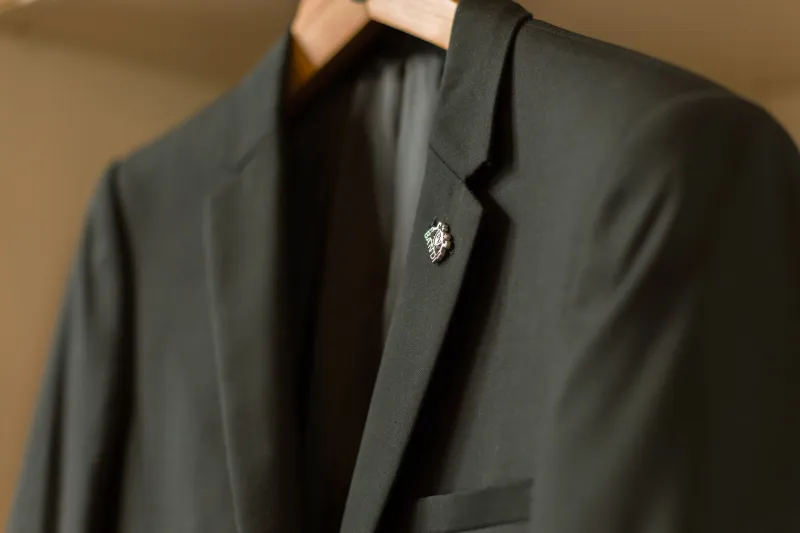
There is a certain kind of UK man who likes the idea of Egyptian jewellery but knows a ring will never make it past the first week. He is not against a bit of visual interest. He simply does not want to fiddle with a band at his desk, take it off for the gym, or explain an ankh to a bloke in the pub. The good news is that menswear has a side door for exactly this sort of thing: the small, useful, slightly overlooked world of lapel pins, tie tacks and cufflinks.
This is not about turning yourself into a walking museum label. It is about using pocket-sized metalwork to add a bit of character to clothes you already wear. Get it right and an Egyptian pin reads like a private reference. Get it wrong and it reads like a school trip souvenir. The difference is usually scale, finish and placement.
Start Small, Stay Sharp
The first rule is to treat the pin as punctuation, not the whole sentence. A 15mm to 20mm lapel pin is plenty. Anything bigger starts to dominate a suit lapel and can tip into costume territory, especially when the motif is immediately recognisable. A clean, single-colour ankh in brushed steel will do more work than a multicoloured enamel scene of Tutankhamun's death mask.
Motifs that tend to read sharp rather than fancy include the ankh in a simple line form, the Eye of Horus reduced to a neat graphic, a single hieroglyph, a lotus bud, or a scarab shown in profile rather than as a jewel-encrusted beetle. A cartouche can work if it is small and restrained, but avoid anything that looks like a holiday trinket. The same goes for winged sun discs and full pharaonic busts: they can be fun, but they need a very casual outfit and a very confident wearer.
Finish matters as much as shape. Matte steel, oxidised silver, brushed brass and subtle enamel all sit well with British menswear. High-shine gold plate, fake stones and dangling chains are harder to wear in an office or a normal pub. They are not wrong, but they are a different mood.
The Motifs That Read Comme Il Faut
For a first pin, the ankh is the obvious choice because it is graphically simple and widely understood without being loud. A small silver ankh on a navy or charcoal lapel looks deliberate. A brass one on a brown overcoat feels warmer and slightly more casual.
The Eye of Horus is another strong option, particularly in a clean outline. It has a bit of edge without needing colour. A single hieroglyph — a bird, a reed, a water sign — can be even better if you want something that only the curious will ask about. It reads as pattern from a distance and as a reference up close.
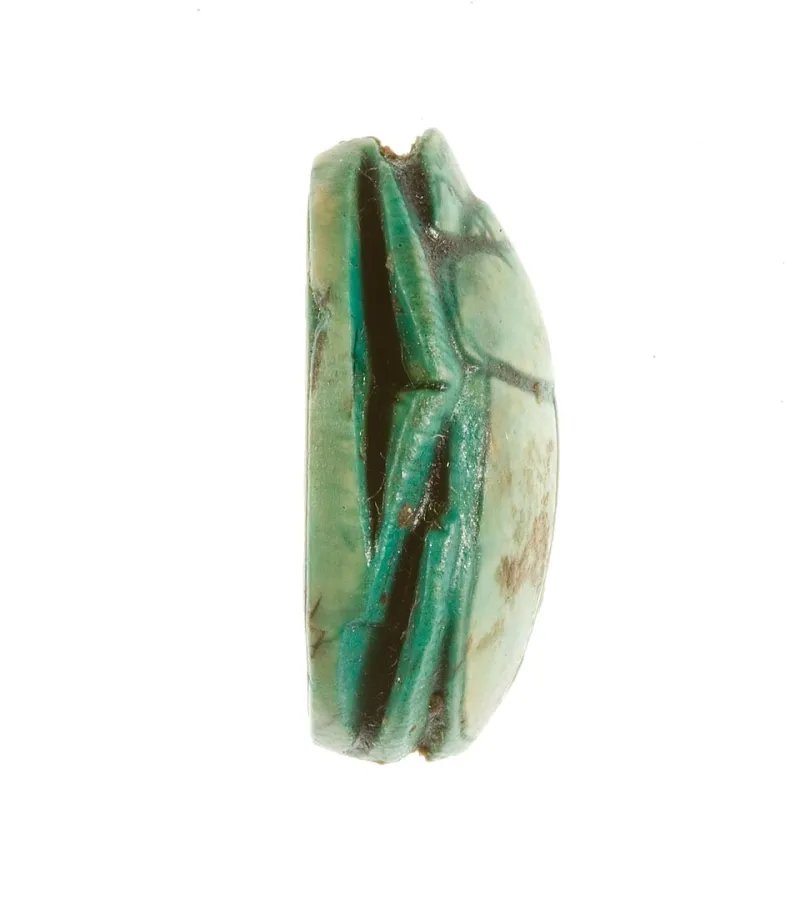
Scarabs are trickier. A realistic beetle can look like a brooch from a fancy-dress box. A geometric scarab, or one in profile with a simple cut-out shape, is much easier to wear. Cufflinks are a good home for the scarab because they are already a small, formal detail. A pair in brushed steel with a simple scarab face will survive a wedding, a work dinner and a funeral without looking out of place.
Scaling Against Suits, Coats and Knitwear
With a suit, keep the pin to one lapel and one piece of metal. A small ankh or Eye of Horus on the left lapel is enough. If you wear a tie, a tie tack can be useful, but do not wear a tie tack, a tie bar, a lapel pin and a pocket square all at once. Choose one piece of jewellery and let the rest of the outfit breathe. Cufflinks should be plain or subtly Egyptian; they should not compete with the pin.
On an overcoat, you can go slightly larger. A 20mm brass pin on a charcoal wool coat looks good because the coat is a big, plain surface. Place it on the lapel, not halfway down the chest. If the coat has a scarf, keep the pin on the coat rather than the scarf; scarves move, pins snag, and British weather does not need the drama.
Knitwear needs a lighter touch. Do not pin a heavy metal badge through a fine merino jumper. Instead, use a small pin on the lapel of a denim jacket, an overshirt or a chore coat. If you want to wear something with a knitted outfit, a tie tack or a small cufflink is safer than a lapel pin. The goal is to look like you got dressed, not like you are wearing a display case.
The Office Dress Code Reality
Most UK offices do not have a formal rule about lapel pins, but they do have an unwritten one: do not make colleagues feel they need to comment. A matte metal pin in a simple motif is usually fine. A bright enamel scarab with Gemma from accounts asking if you have been to Egypt is probably not the energy you want on a Tuesday morning.
If you work in a conservative environment, start with cufflinks or a tie tack rather than a lapel pin. Cufflinks only work with a double-cuff shirt, so check that first. A tie tack should sit neatly across the tie, not pull it out of shape. In a more casual office, a small pin on a jacket or overshirt is an easy way to add personality without wearing a necklace or a ring. If you wear a lanyard, keep the pin away from the cord; clashing metal and nylon is not the look.
Weather, Wear and Where to Buy
British weather is hard on cheap jewellery. Plated zinc and mystery metal will dull, flake or leave a green mark on a shirt collar. Look for stainless steel, solid brass with a proper lacquer, or oxidised silver. These finishes handle rain and central heating far better. Take pins off before you shower or sleep, dry them if they get caught in a downpour, and store cufflinks separately so they do not scratch.
You do not need to spend a fortune. UK independent jewellers, museum shops and menswear labels are often better than generic online marketplaces because you can check the weight and finish. A good pin should feel solid for its size. If the back is flimsy or the pin stem is bent in the packet, walk away. For cufflinks, check that the toggle moves smoothly and the face is fixed firmly. These are small objects, but they are handled a lot.
A Simple Starting Rotation
If you want to try this without overthinking it, build a three-piece rotation: a small brushed-steel ankh lapel pin, a pair of brass scarab cufflinks, and a single-hieroglyph tie tack. Wear the pin on a navy suit or a charcoal overcoat. Wear the cufflinks with a white or pale blue double-cuff shirt. Wear the tie tack only when you are actually wearing a tie. That is enough to cover work, weddings and the better end of a night out.
Egyptian-inspired style does not have to mean rings, chains and a full tomb's worth of gold. Sometimes it is a tiny piece of metal on a lapel, doing just enough. The pin is not a loophole exactly. It is a quieter way to say you know the reference — and you know how to wear it.