Grandad’s Ankh, Your Jacket: How to Wear Inherited Egyptian Jewellery in 2026
There is a particular kind of jewellery box that gets passed around British families: a small velvet square containing a gold ankh from a auntie’s trip to Cairo, a scarab ring from a grandad’s market find, or a cartouche pendant bought long before anyone thought about layering. It is rarely labelled “streetwear”. But in 2026, some of the best personal style comes from pieces with a bit of history rather than a fresh price tag. The trick is not to treat inherited Egyptian jewellery as a museum object or a costume prop. Treat it as a starting point — then make it yours.
Start With the Story, Then the Metal
Before you reach for the silver dip, ask what the piece actually means to you. Was it worn every day by someone you loved? Was it bought on a holiday that became family folklore? Or is it simply a motif you like, with a vague “Uncle Whoever” attached? None of those answers are wrong, but they change how far you should go with alteration. A piece with deep sentimental weight might only need a clean and a better chain. A piece with a good shape but no strong attachment can be remodelled more freely.
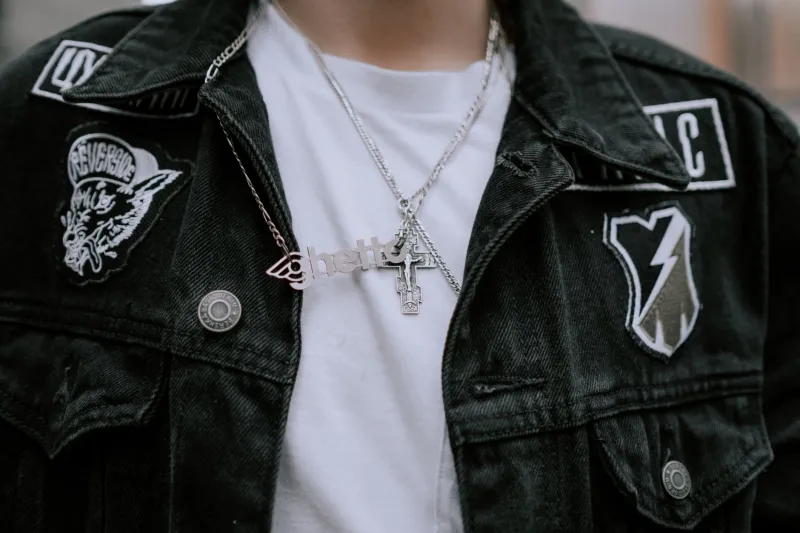
It also helps to separate the symbol from the setting. An ankh, scarab or Eye of Horus can read as bold and modern in the right context, but it can tip into souvenir-shop territory when it is paired with too many other Egyptian references. The aim is personal, not themed. One inherited pendant with a plain T-shirt, wide-leg jeans and a worn denim jacket will usually look sharper than a full “tomb raider” ensemble.
The Condition Check: What You Can Live With
Give the piece a proper once-over in daylight. You are looking for loose stones, bent prongs, worn plating, stretched chains, cracked enamel and clasps that open too easily. If it is gold, check for hallmarks — UK hallmarking is a useful guide to metal quality, though older imported pieces may not carry the same marks. If it is silver, tarnish is normal and often fixable; deep scratches and thinned metal are less so.
Be honest about wearability. A heavy ring that spins on your finger will end up in a drawer. A pendant with a chain that sits awkwardly at the collarbone may need a different length before you ever wear it out. And if a clasp has a mind of its own, fix that before you trust it on a night bus. Sentiment is lovely; a lost heirloom is not.
Clean, Repair or Remodel?
These are three different decisions, and it is worth making them in order.
Clean
Start gentle. Warm water, a soft brush and a mild washing-up liquid will handle most everyday grime on solid metal. Avoid harsh dips on plated pieces, pearls or anything with glued stones. If the piece has real age or uncertain materials, a local jeweller is a better bet than a kitchen experiment. A professional ultrasonic clean is usually inexpensive and can make a tired piece look cared for without erasing its character.
Repair
Repair is about safety and function: new clasps, re-tipped prongs, a re-soldered jump ring, a chain replacement. This is where a good high-street jeweller or a workshop in a place like Birmingham’s Jewellery Quarter earns their keep. Ask for the old parts back if they are being replaced — they can become part of the story, or at least stop you wondering where they went.
Remodel
Remodelling is the big step. It might mean resizing a ring, converting a pendant into a charm, adding a stronger bail, or setting an old scarab into a simpler modern band. The goal is not to sand away the history. It is to remove the barriers that stop you wearing it. Keep the original motif and as much of the original metal as possible, and be clear with the jeweller about what you want to preserve. A good workshop will tell you what is sensible and what will weaken the piece.
Build the Outfit Around the Piece, Not the Theme
The easiest way to make inherited Egyptian jewellery feel current is to let it be the loudest thing in the outfit. In 2026, UK streetwear is still leaning towards relaxed shapes, utility details and low-key colour, which gives a detailed pendant or a chunky ring plenty of room.
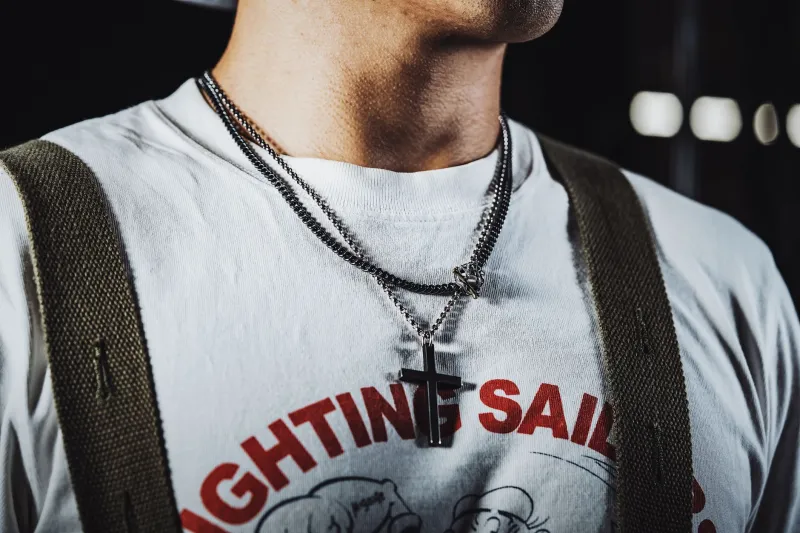
Try an inherited ankh on a short chain over a plain black tee, with a boxy overshirt and straight-leg cargos. Or take a scarab ring and wear it alone on the index finger with a grey hoodie and a battered bomber. A cartouche pendant works well against a denim jacket, especially if the rest of the look is deliberately plain. The point is contrast: old metal, modern silhouette; family history, everyday clothes.
Avoid matching the piece to a full Egyptian-inspired outfit unless you are genuinely dressing for a party. A single motif reads as personal. Five motifs read as a theme night. If you want to layer, mix in non-Egyptian chains or a plain signet rather than another scarab.
The Practical Kit for UK Wear
British weather is not kind to jewellery. If you plan to wear an inherited piece regularly, think about the chain, the clasp and the metal. Sterling silver will tarnish; gold vermeil can wear; plated costume pieces may not survive daily wear. Keep a soft polishing cloth in your bag or jacket pocket, and take rings off before the gym, the garden or a heavy night out. A tiny zip bag is not glamorous, but it stops chains tangling and slows down tarnish.
If the piece is genuinely precious, check your home insurance and consider a valuation. If it is more sentimental than valuable, that does not make it less worth caring for. A £20 repair on a ring you actually wear beats a perfect heirloom hidden in a drawer.
When to Stop
Respectful reinvention has a limit. If a piece is fragile, historically interesting or simply not yours to change, leave it alone. Wear it on a chain, frame it, or keep it for occasions. The family story does not need to be updated to be valid. But if the only thing stopping you wearing it is a tired chain or a ring that no longer fits, that is a practical problem, not a sacred one.
The best inherited jewellery in 2026 will not look like it came from a museum case. It will look like it belongs to someone with a life, a wardrobe and a reason to keep the story moving.