Dull Metal, Sharp Look: Why Oxidised Egyptian Jewellery Belongs in Your 2026 Rotation
You can spot gold-tone Egyptian jewellery from across a busy pub. It catches every bit of light, it announces itself, and after an hour under warm bulbs it starts to look a bit panto. Oxidised silver does the opposite. It sits back, lets the shape do the work, and looks like it has been somewhere. In 2026, that is exactly what UK streetwear is asking for.
This is not a case against gold. It is a case for the other finish — the darker, quieter one that most blokes walk past on the jewellery stand because it does not sparkle at them. Give it a chance and it will out-style half the shiny stuff in your rotation.
Shine Is the Problem
Gold-tone jewellery has a habit of reading costume. That is fine on a beach in August, less fine on a Northern Line platform in February. The shine competes with everything: the reflective strip on your jacket, the gloss of a new trainer, the flash of a phone screen. Too many highlights and the outfit starts to feel noisy.
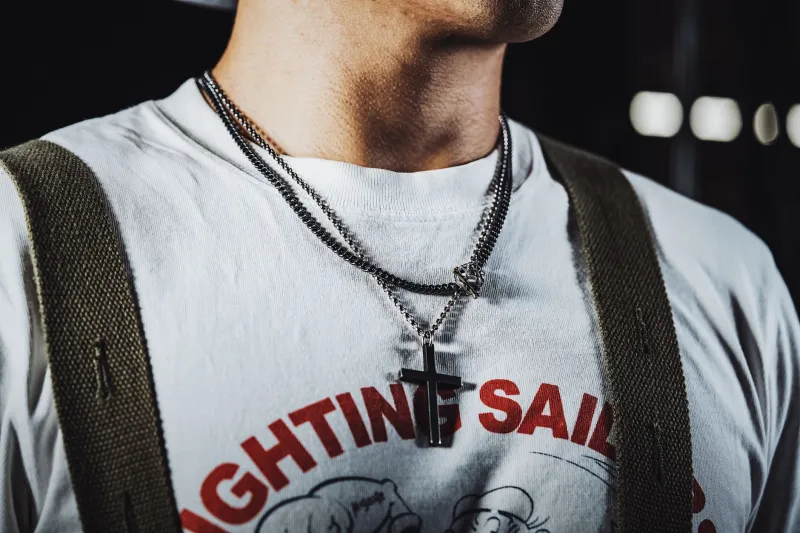
Oxidised silver — sometimes sold as blackened, darkened or antique-finish silver — pulls light in rather than throwing it back. The recesses go near-black, the raised areas keep a soft grey gleam. It looks older than it is. It looks like it has a history. That is the whole point.
Denim, Black Nylon and Grey Marl
This is where the finish earns its keep. Indigo denim, especially raw or heavily washed, has a depth that polished gold cannot match. Oxidised silver sits inside that palette instead of fighting it. A blackened ankh on a long chain over a denim jacket looks like it belongs there; the same pendant in bright gold looks like it was added five minutes before the photo.
The same goes for black outerwear. A Berghaus jacket, a MA-1 bomber, a plain black parka — these are not precious garments. They are practical, slightly scuffed, built for British weather. Darkened silver has the same energy. It reads as part of the kit rather than a decoration stuck on top.
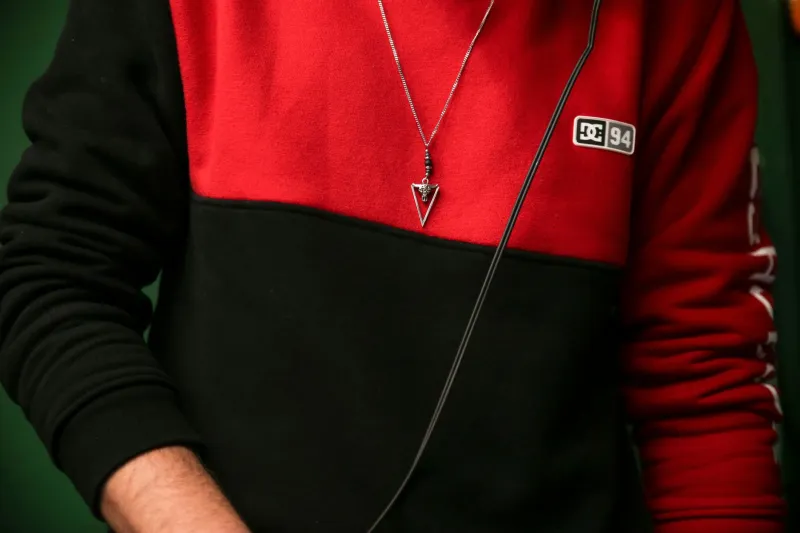
And then there is grey marl. The national fabric of the British sofa-and-corner-shop circuit. A £30 hoodie and an oxidised scarab ring should not work together, but they do, because neither is trying too hard. The metal adds texture without adding glare.
Motifs That Improve When They Darken
The ankh is the obvious winner. Clean lines, a simple silhouette, and plenty of recessed space for the oxidation to settle. A blackened ankh reads as a graphic rather than a trinket.
The scarab is next. The detail on the beetle’s back — the ridges, the legs, the underside — only becomes visible when the finish darkens the grooves. In polished silver it can look like a blob from a distance. Oxidised, it has definition.
The Eye of Horus is a natural fit too. It is already a strong, high-contrast shape. Darkening the lines makes it look more like a piece of street signage and less like a souvenir.
Where oxidation is less useful: very fine filigree, delicate chain-link cartouches and anything with tiny inset stones. The darkening swallows the detail and the piece just looks grubby. Keep it simple. Chunky rings, heavier curb chains, solid cuffs and bold pendants are the sweet spot.
Patina, Not Neglect
There is a difference between a patina and a mess. A patina is even, deliberate, and sits in the recesses. Neglect is patchy, crusty and smells faintly of old swimming pool. The good news is that keeping oxidised silver on the right side of the line takes about thirty seconds a week.
Keep it away from chlorine, perfume, hair products and the gym. Take it off before you shower. Store it dry — a small zip bag is fine, a drawer with a rubber band around the chain is not. Wipe it with a soft cloth after wearing. If the raised areas get too dark, use a silver polishing cloth gently, and only on the high points. You want to keep the darkness in the grooves. That contrast is the whole look.
If a piece goes completely black — usually after a summer of sweat and sunscreen — a jeweller can re-oxidise it properly. Do not attack it with toothpaste. That is how you end up with a scratched pendant and a bad mood.
Three Outfits, One Finish
Start with what you already own. A black or charcoal tee, loose jeans, and a single oxidised ankh on a 55cm chain. That is the whole outfit. No other jewellery needed.
Add a layer. Grey hoodie, black cargo trousers, chunky oxidised signet ring on the index finger. The ring does the talking; the hoodie does the rest.
Go smarter. Dark denim jacket, white tee, blackened scarab pendant tucked under the collar so it only shows when you move. It is a small detail, but it changes how the whole thing reads.
What to Look For on the High Street
Check the metal. Solid 925 silver with an oxidised finish will hold up. Plated base metal with a black coating will flake at the edges within months and look cheap. Look for weight, a proper clasp, and a finish that is dark in the recesses rather than painted on top.
You do not need to spend a fortune. UK high-street jewellers, vintage stalls and independent makers all carry oxidised pieces now. The trick is to buy one good thing rather than three shiny things. A single blackened ankh that you wear every day will do more for your look than a whole jewellery box of gold-tone pendants that stay in the drawer.
Gold-tone had its moment. Oxidised silver is having a longer one. It suits the weather, it suits the clothes, and it looks like you meant it. That is the finish worth building around in 2026.