Wear the Meaning: A 2026 UK Streetwear Code for Egyptian Symbols
Egyptian-inspired streetwear walks a thin line. On one side is a sharp silver ankh over a plain black hoodie, worn on the Tube like any other piece of jewellery. On the other is a gold pharaoh collar, fake tan and a headdress, worn once for a themed birthday and never again. In 2026, both looks are easy to find in the UK. Only one of them tends to feel right.
The difference is not about being serious all the time. Streetwear is meant to be playful. The difference is context, knowledge and intent. An ankh is not a logo invented for a T-shirt. A scarab is not a random beetle. A cartouche is not just a nameplate with squiggles on it. These are Egyptian symbols with living cultural weight, and wearing them well means knowing what you are putting on your body.
The line is context, not cloth
Appreciation says: I like this symbol, I know roughly what it means, and I am wearing it as part of my own style. Appropriation says: this looks exotic, so I will use it as a costume or a mood board. The gap between those two positions is usually closed by a bit of homework and a bit of restraint.
That does not mean every buyer needs a degree in Egyptology. It means you should be able to answer a simple question: what is this symbol? If the answer is no idea, it looked cool, that is not a crime, but it is a reason to pause. The ankh generally represents life. The scarab is tied to rebirth and the rising sun. The wedjat, or Eye of Horus, is associated with protection and healing. A cartouche frames a name in hieroglyphs. None of these meanings need to be recited at the pub. They just need to inform what you buy and how you wear it.
Three questions before you buy
First: do I know what this means? If a pendant is sold as an Egyptian symbol but the seller cannot tell you whether it is an ankh, a tyet knot or a random shape, that is a warning sign. Second: where did it come from? That does not always mean an artisan provenance story. It can mean a charity shop find, a reputable high-street jeweller, or an independent brand that actually credits its references. Third: would I wear this to a normal pub, or only to a party with a theme? If it only works with a costume, it is probably costume jewellery in the wrong sense.
Ask sellers direct questions. What metal is it? Is it plated? Who made it? What is the symbol? A good seller will not mind. A souvenir stall that shrugs at every question is telling you something useful.
Sourcing: skip the novelty aisle
The UK has plenty of places to buy Egyptian-inspired jewellery without heading straight for tourist tat. Charity shops and vintage markets still turn up solid silver ankhs and scarab rings, especially in cities with older jewellery trades. Camden, Brick Lane and Manchester's Northern Quarter have stalls and shops where the good and the grim sit side by side, so handle pieces before you commit. Online, look for independent jewellers who name their materials and explain their symbols. If a product page calls something ancient Egyptian without saying what it is, keep scrolling.
There is also a case for buying from Egyptian makers and designers where you can. Egypt is not a lost civilisation that exists only in museums. It is a modern country with living craftspeople, and their work deserves credit rather than being copied badly and sold as generic mystery jewellery.
Style it like you mean it
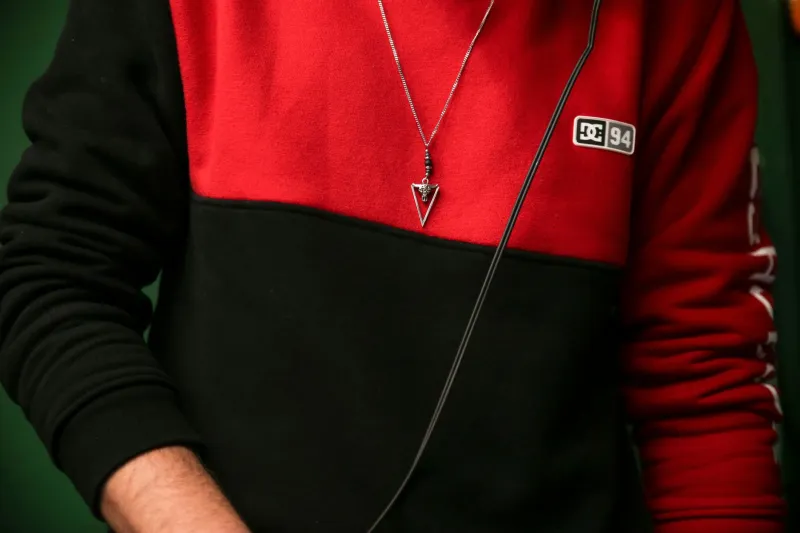
The most respectful look is often the quietest one. One strong piece, modern clothes, no themed extras. A chunky silver ankh on a long chain over a black sweatshirt. A scarab ring worn with a plain signet on the other hand. A cartouche pendant tucked under an open shirt, visible only when you move. A single cuff on a night out, not a full armful of gold.
Keep the outfit British and current: straight-leg jeans, cargo trousers, a trench, a heavy overcoat, a clean trainer. The jewellery should feel like it belongs to the person wearing it, not like a rental costume on top of them. Avoid the clichés: no linen wrap skirts, no gold sandals in November, no pharaoh headdress unless you are actually on stage. The symbols are strong enough without the fancy-dress scaffolding.
Respect is not a mood board
There is a difference between referencing a culture and using it as decoration. Do not mix sacred symbols with joke slogans. Do not describe Egyptian imagery as tribal. Do not treat a cartouche as a novelty nameplate without checking that the transliteration is not nonsense. And do not assume that because a symbol is old, it belongs to everyone with no context.
At King of Ankh, the interest is in ancient symbols worn through modern UK streetwear, not in turning ancient Egypt into a fancy-dress rack. That means enjoying the boldness of an ankh with a hoodie, the weight of a scarab ring with a work jacket, and the oddity of a cartouche on a rainy British high street. It also means knowing when to stop.
The modern look is not the loudest one. It is the one that wears the symbol with a bit of knowledge, a bit of care and a lot of ordinary life. That is what makes it style rather than costume.